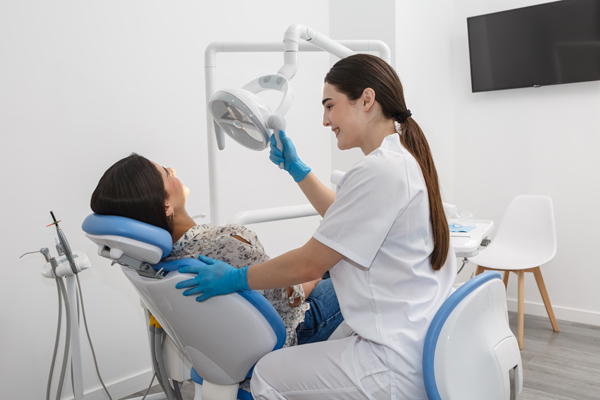
Patients who need to restore their smile after suffering from gum disease can visit the dentist for periodontics care. Read on to learn more about this branch of dentistry. Irritation and sensitivity may occur due to root exposure resulting from gum recession.
Periodontics and dental health
Regardless of the stage of gum disease, it is important to seek care as soon as possible so that the dentist can treat the disease and initiate healing of the gums. The teeth can become badly infected and fall out without treatment. This will necessitate additional treatments, which may be costly and invasive, so it is better to undergo treatment for gum disease early.
Gum disease, brushing teeth too hard, or genetic factors may all contribute to receding gums. Gum recession occurs when the gums and tissues around the teeth begin to detach from the teeth, making the teeth seem longer. Many people suffer from receding gums, which are unsightly and harmful to their dental health. Gum recession can also contribute to tooth loss.
Gum restoration
The dentist can perform a gum restoration if the patient has a healthy oral cavity. Gum restorations can hide exposed roots, reduce sensitivity, and promote the growth of new gum tissues. The dental professional can use tissue from another part of the mouth to cover the exposed region during the procedure.
Gum restorations are done as periodontics care to prevent further recession, save the teeth, and enhance the smile's appearance. Gum restorations will keep the roots of teeth from decaying and save the cost of tooth replacements and cavity repairs in the future. Gum restoration procedures can be done in three different ways, including:
Connective tissue graft
The dentist will take skin from another part of the oral cavity (normally the palate) for this procedure. They can make a flap and cut tissue from under it to transfer it to the gums. The dentist will apply the tissue to the recessed gum areas, and it will slowly heal, resulting in healthier gums.
Free gingival graft
This procedure is like the connective tissue graft, except that instead of using a flap, the dentist will extract skin directly from the palate. Dentists perform a free gingival graft to help improve gum density.
Pedicle graft
If the gum recession is not so advanced, then a patient can benefit from a pedicle graft. The dentist will use nearby gum to patch those areas during the procedure. The gums will be pulled down and stitched into their proper position.
Donor tissue may also be used for gum restorations. For at least two weeks, patients must allow their gums time to heal. When deciding which restoration is appropriate for the patient, the dentist will review the recovery guidelines.
In conclusion
When patients are experiencing gum-related issues, the dentist will recommend the best periodontics care for their condition. The best place to start is to book an appointment and learn about the options available to heal your teeth and gums. Minimally invasive treatments are possible if patients see a dental professional on time.
Request an appointment here: https://taylorsmiles.net or call Taylor'd Smiles at (704) 812-1206 for an appointment in our Mooresville office.
Check out what others are saying about our dental services on Yelp: Periodontics in Mooresville, NC.
Related Posts
Understanding the core distinctions between a full mouth reconstruction and a standard smile makeover also helps individuals see how general dentists select the most appropriate dental procedure for their unique oral health needs. While both services significantly enhance your smile, the underlying clinical goals remain entirely distinct. Our dentist evaluates patients to determine whether they…
Invisalign® clear aligners give you a discreet way to improve the alignment of your teeth. It involves using rigid, transparent plastic trays to push your teeth to a better alignment gradually. These aligner trays are virtually impossible to notice in the wearer’s mouth, allowing you to get teeth straightening treatments without having to explain what…
Deep teeth cleaning is a specialized dental procedure that removes plaque and tartar buildup beneath the gumline. It is recommended for patients with early to moderate periodontal disease or those at risk of developing gum infections. Unlike routine cleanings, deep teeth cleanings target bacteria that contribute to gum disease and bone loss. Recognizing the signs…
Facing a dental infection is a stressful experience. Fortunately, a root canal treatment offers a reliable way to achieve lasting relief. It is a common procedure that helps prevent permanent tooth loss, allowing you to keep your natural smile complete and healthy for a lifetime.When bacteria enter the soft center of a tooth, it causes…